Hurricane Response, De-escalation & NDAA: The Future of Public Safety Drones with DJI's Wayne Baker
March 10, 2026
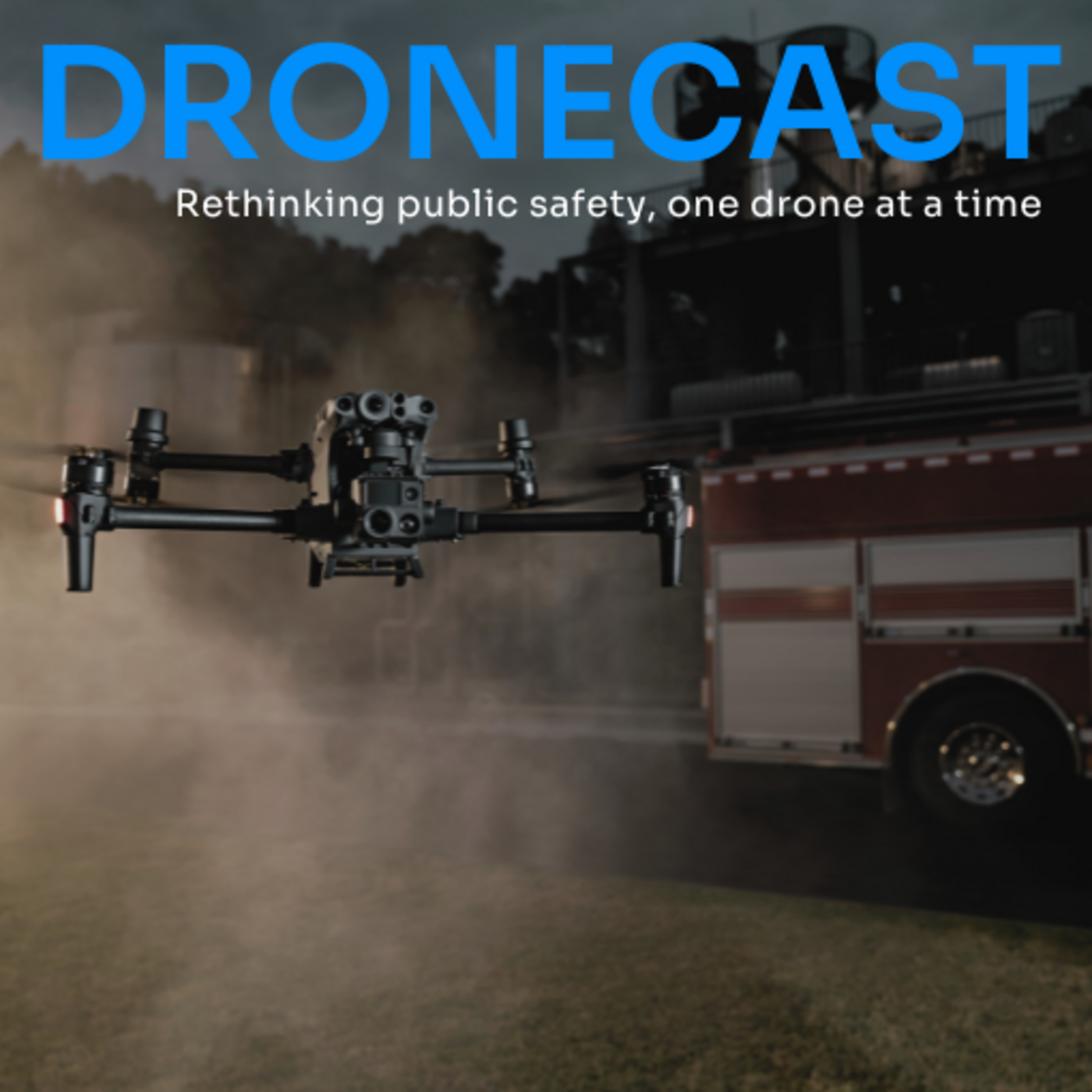
In Part 2 of this episode, the conversation shifts from early proof-of-concept moments to the broader ecosystem that now surrounds public safety drone programs.
Joe Kearns shares powerful examples from recent disaster response operations, including a hurricane response in Asheville where drones were used not only to locate trapped victims but also to deliver food, water, and medicine to people cut off from rescue teams.
Beyond the technology itself, the discussion explores the training systems, standards, and leadership required to scale drone programs responsibly. As drones become more embedded in emergency response, the conversation is no longer about whether they belong in public safety, but how agencies prepare the next generation of operators to use them effectively.
[This episode was recorded on June 27, 2025. Some references may reflect information available at that time.]
Innovation in emergency response rarely happens in controlled environments.
More often, it emerges during disasters where traditional methods are no longer enough.
Chief Wayne Baker shares a powerful example from hurricane response efforts in Asheville, North Carolina. Massive flooding left entire areas inaccessible, trapping victims who could not be reached by ground crews. Drones were immediately deployed to locate survivors in areas rescuers physically could not reach.
But the response didn’t stop at search and rescue.
In one remarkable moment, farmers brought in heavy-lift agricultural drones and adapted them on the spot. Using modified baskets attached to the drones, they delivered food, water, and medications to stranded victims waiting for help. Smaller drones first identified the victims and determined what supplies were needed. Larger drones then carried the aid directly to them.
It was an improvised solution in the middle of a disaster, but it demonstrated something profound: drones are no longer just eyes in the sky. They are becoming active tools for delivering assistance when roads, bridges, and traditional logistics fail.
As drone programs expand, however, technology alone is not enough.
Wayne explains how early drone programs quickly ran into a new challenge: training. Many first responders had little aviation or technical background, and agencies needed a structured way to prepare pilots for real-world operations.
Drawing from his background as a fire service training officer, Wayne helped develop early drone training frameworks that combined aviation knowledge, hands-on flight skills, and operational decision-making. These programs eventually evolved into regional standards used by public safety UAS response teams and agencies across the country.
The conversation highlights a crucial reality for the future of public safety drones: success depends not only on hardware, but on the people operating it.
The agencies that will benefit most from drone technology are the ones investing in training, leadership, and operational readiness today.
What You'll Learn:
- How drones were used to locate and support victims during hurricane response operations
- How heavy-lift drones delivered food, water, and medicine to stranded survivors
- Why disaster zones often drive the most important technological innovation
- How public safety agencies began developing structured drone training programs
- Why motivation and leadership are just as important as technical skills when building drone teams
Helpful Links:
- Fill out the Audience Form here.
- Explore more episodes and insights on the official DroneCast website: https://www.dronesense.com/dronecast
- Ready to launch or enhance your drone program? Get Started with DroneSense today!
- Parrot, ANAFI UKR Tech Sheet: https://5n8jp.share.hsforms.com/2oWfNvmGLRCeKUWcJGtFbBg
Episode Highlights:
- [04:38 – 05:28] Drones in Hurricane Response
Joe describes how drones were deployed during a hurricane disaster in Asheville, North Carolina to locate trapped victims in flooded areas that rescuers could not reach by ground. - [05:28 – 06:20] Delivering Food and Medicine by Drone
Farmers adapted heavy-lift agricultural drones to carry baskets of food, water, and medication to stranded victims, demonstrating how drones can deliver aid when roads are inaccessible. - [08:41 – 09:40] Building the First Training Standards
Joe explains how early drone programs developed structured training systems to ensure first responders could safely and effectively operate UAS technology.
Dronecast: Rethinking Public Safety, One Drone at a Time Podcast is handcrafted by our friends over at: fame.so
Previous Guests include: Matt Rowland, Jason Burnside
Check out our 3 most downloaded episodes:
Previous Guests include: Matt Rowland, Jason Burnside
Check out our 3 most downloaded episodes: