From Officer to Drone Innovator: Chris Robertson’s Journey in Public Safety
December 30, 2025
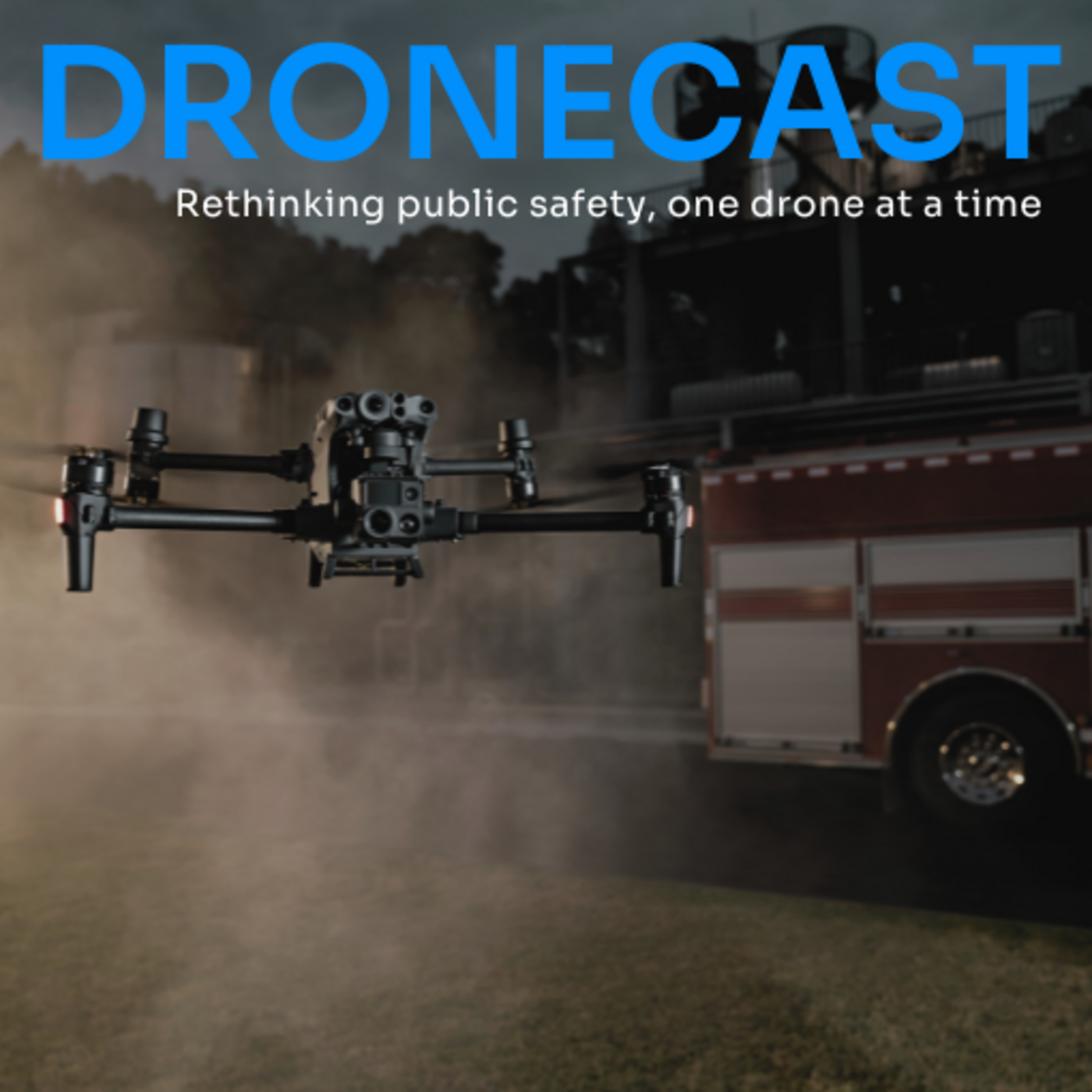
In this compelling 2-part episode of DroneCast, host Joe Kearns III sits down with Christopher Robertson to explore how drones have transformed public safety operations—from law enforcement to high-risk search and rescue. Drawing from real-world deployments, Chris shares how drones have been used as tactical distractions during SWAT apprehensions, critical intelligence tools during cliff rescues, and why hands-on training is essential as drones become embedded in shared airspace. This episode offers a candid look at how experience, innovation, and aviation discipline intersect to make drone programs safer and more effective.
In this 2-part episode of DroneCast: Rethinking Public Safety, One Drone at a Time, host Joe Kearns III speaks with Christopher Robertson, a public safety aviation professional whose career spans law enforcement operations, traditional manned aviation, and unmanned aerial systems. Drawing from this unique background, Chris shares how he has bridged the discipline of conventional aviation with modern UAS applications to transform tactical decision-making in public safety missions—especially in environments where terrain, visibility, and risk limit traditional approaches.
For Part 1 Chris provides firsthand accounts of how drones have reshaped operations in the field, including a SWAT mission where a drone’s noise and visibility were deliberately used as a distraction, allowing officers to safely apprehend a suspect in dense, wooded terrain. He also recounts a high-angle rescue on Grey Rock, where drones delivered critical situational awareness before responders committed to hazardous rope systems over a 300-foot drop.
The conversation further explores training and certification challenges within the drone industry. As a traditional pilot, Chris highlights the stark contrast between manned aviation certification standards and Part 107 drone licensing, raising important questions about skill validation, safety, and preparedness as drones increasingly operate in shared airspace. Throughout the episode, he emphasizes that drones are not replacements for first responders, but force multipliers—tools that reduce uncertainty, improve planning, and ultimately protect lives. This episode is essential listening for law enforcement leaders, search-and-rescue teams, aviation professionals, and agencies building or scaling public safety drone programs.
Stay tuned for Part 2!
What You'll Learn:
Stay tuned for Part 2!
What You'll Learn:
- How drones can be used as tactical distractions during law enforcement operations
- Why UAS are critical tools in high-angle and remote rescue missions
- How drones improve situational awareness before responders commit to risk
- The limitations of written-only drone certification and why hands-on training matters
- Key differences between manned aviation standards and Part 107 licensing
- How drones act as force multipliers—not replacements—in public safety
- Why experience-driven training is essential for safe drone integration
Helpful Links:
- Fill out the Audience Form here.
- Explore more episodes and insights on the official DroneCast website: https://www.dronesense.com/dronecast
- Ready to launch or enhance your drone program? Get Started with DroneSense today!
- Parrot, ANAFI UKR Tech Sheet: https://5n8jp.share.hsforms.com/2oWfNvmGLRCeKUWcJGtFbBg
Episode Highlights:
- [17:19] The Certification Gap in Drone Aviation
Chris explains why Part 107 certification relies solely on a written test and how this differs from manned aviation, where pilots must demonstrate real-world skills. He discusses why hands-on evaluation is critical as drones increasingly operate in shared airspace. - [19:44] Using Drones as Tactical Distractions
A SWAT operation in wooded terrain leads to a creative use of drone noise and visibility—redirecting a suspect’s attention and allowing officers to move in safely and undetected. - [22:34] Drones in High-Angle Rescue Operations
Chris recounts a cliff rescue on Grey Rock involving a 300-foot drop, where drones provided essential intelligence to plan rope systems and safely extract the stranded individual.
Episode Resources:
- Christopher Robertson on LinkedIn
- Joe Kearns on LinkedIn
- Get started with Dronesense
- Parrot, ANAFI UKR Tech Sheet: https://5n8jp.share.hsforms.com/2oWfNvmGLRCeKUWcJGtFbBg
Dronecast: Rethinking Public Safety, One Drone at a Time Podcast is handcrafted by our friends over at: fame.so
Previous Guests include: Matt Rowland, Jason Burnside
Check out our 3 most downloaded episodes:
Previous Guests include: Matt Rowland, Jason Burnside
Check out our 3 most downloaded episodes: