From the Archives: Advancements in Drone Technology for Public Safety with Matt Rybar from Unmanned Vehicle Technologies
September 22, 2026
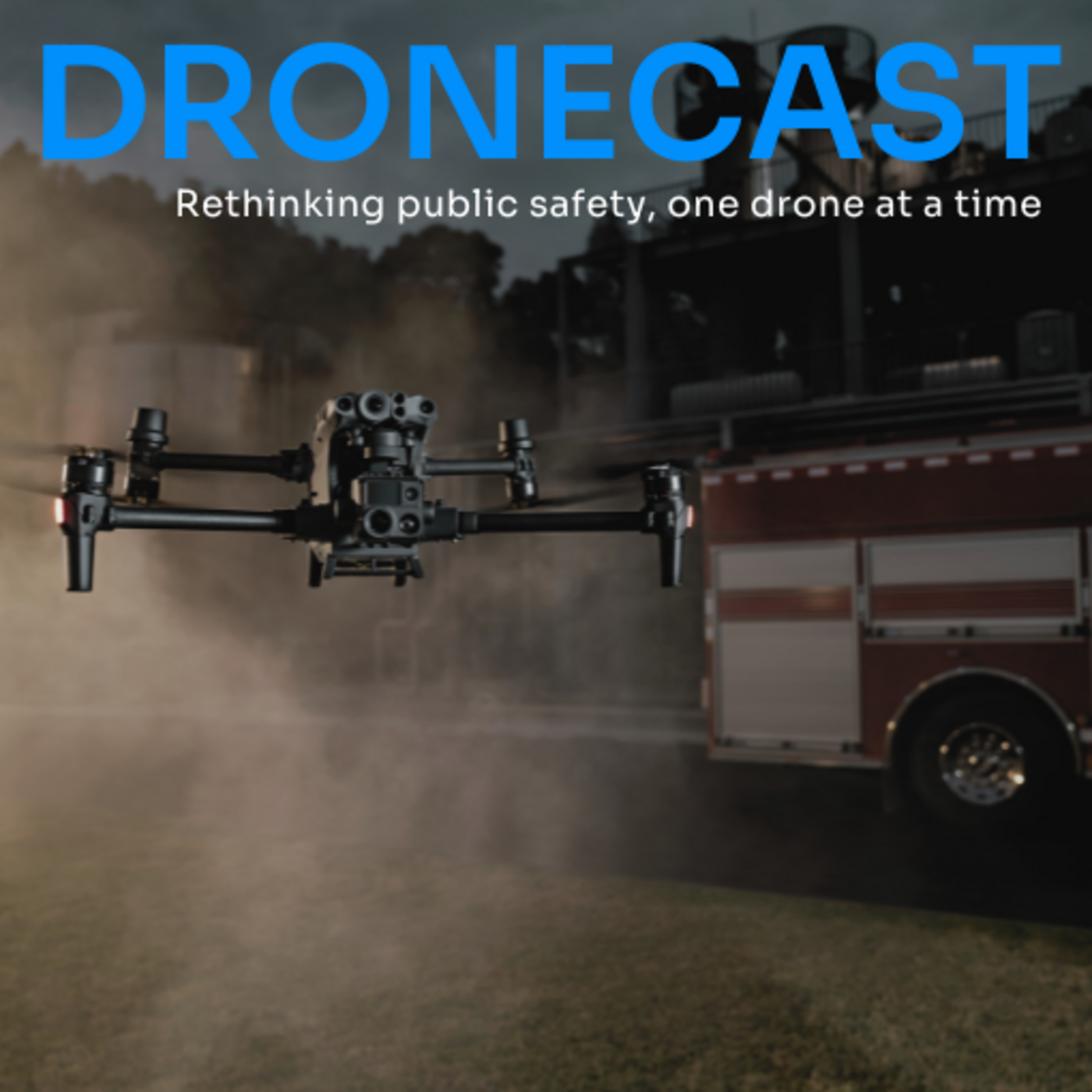
In this episode of DroneCast: Rethinking Public Safety, One Drone at a Time, host John McLeod speaks with Matt Rybar, Vice President of Special Projects at Unmanned Vehicle Technologies (UVT). They explore the evolution of public safety UAS programs, strategies for building lasting public trust, critical steps for structuring scalable drone operations, and how Drone as a First Responder (DFR) is delivering real-time actionable intelligence to ground responders.
Original Recording Date: June 6, 2024
Host John McLeod sits down with Matt Rybar, Vice President of Special Projects at Unmanned Vehicle Technologies (UVT). Blending his background in electrical engineering with years of law enforcement experience as a patrol deputy, patrol officer, and emergency manager, Matt brings both practical public safety expertise and technical depth to the conversation.
The discussion traces the historical evolution of public safety drone programs from 2016 to the present day, emphasizing how hardware advancements and payload quality, especially thermal imaging have dramatically expanded operational capabilities. Matt outlines the critical importance of establishing public trust early on through transparency and clear communication regarding how drones are used to benefit citizens. He shares practical guidance for agencies launching new programs, stressing the need for a solid deployment plan, structured recurring monthly training, and a robust program management software foundation like DroneSense before chasing new tech trends. Finally, Matt dives into the paradigm shift of Drone as a First Responder (DFR), explaining how deploying drones ahead of ground units provides critical, actionable intelligence, clears lower-priority calls faster, and optimizes public safety responses.
Why This Episode Matters Today:
As public safety agencies rapidly adopt and scale drone operations, establishing transparent public communication and building a sound operational framework are essential. Matt Rybar’s dual perspective as a former responder and technology solution provider demonstrates how proper planning, policy, and DFR integration directly improve officer safety, speed up incident response, and foster genuine community trust.
Episode Highlights:
- [04:55] Matt says that drone technology has come a long way. He remembers the first thermal camera that could be attached to a small aircraft, and compares it to the thermal cameras that are available now, saying they are ten times the quality. Matt also cites the example of a missing suspects case that was eventually solved within thirty seconds by a drone—he wonders whether the technology even five years ago would have allowed them to achieve that from the capabilities available. However, while the technology has advanced rapidly, Matt stresses that the foundation of many drone programs remains the same.
- [13:06] Matt discusses the challenges and considerations of starting a drone program for public safety. He advises agencies to start with a deployment plan, determine the mission set, and establish initial and recurring training for team members—Matt says it boils down to the question, ‘What does your mission set look like? How are you going to deploy that aircraft? What's your initial training going to look like?’. Matt also emphasizes the importance of selecting the right software and hardware solutions, and recommends using a holistic program management tool like DroneSense.
- [20:51] Matt explains that DFR involves making drones the first on-scene responders to provide actionable intelligence to human responders before their arrival. He says that, while traditional call takers do an excellent job, in times of crisis there can be miscommunication or misunderstandings that lead to delays or issues. Matt says that getting a drone on the scene sooner can generate actionable intelligence that may allow the fire service, the police service, or medical teams to scale up or scale down their response based on that intelligence.
Episode Resources:
Dronecast: Rethinking Public Safety, One Drone at a Time Podcast is handcrafted by our friends over at: fame.so
Previous Guests include: Matt Rowland, Jason Burnside
Check out our 3 most downloaded episodes:
Previous Guests include: Matt Rowland, Jason Burnside
Check out our 3 most downloaded episodes: